

safety, driven by dedication, and delivering innovation.
💡 Key Summary of This Article
Inorganic solvents, such as water, ammonia, and sulfuric acid, are explained in terms of their definition, types, and characteristics. This guide also introduces the types and installation information of Yoohantech leak detectors (integrated, separated, and explosion-proof models), which are essential for compliance with the Chemicals Control Act (CCA).


Today, let’s take a look at inorganic solvents.

What Are Inorganic Solvents?
As the term “inorganic” suggests, these are compounds that are non-biological and not based on living organic matter.
Inorganic solvents are liquid substances that are not organic compounds based on carbon and are used to dissolve other materials.
They generally refer to solvents composed of inorganic compounds such as water, ammonia, sulfuric acid, and sodium chloride solutions.

Characteristics of Inorganic Solvents
Polarity: Polar solvents, such as water, have strong polarity, while non-polar solvents, such as hydrocarbons, have weak polarity.
Solubility: A solvent dissolves a solute more effectively when their polarity is similar or compatible.

Types of Inorganic Solvents
▪️Water (H₂O): The most commonly used inorganic solvent and widely used to dissolve various substances.
▪️Ammonia (NH₃): Liquid ammonia has a distinctive odor and is used in a variety of chemical reactions.
▪️Alkaline Solutions (such as sodium hydroxide and potassium hydroxide): Used to promote chemical reactions and neutralize acidic substances.
▪️Acidic Solutions (such as hydrochloric acid and nitric acid): Used to promote chemical reactions and dissolve specific substances.
▪️Carbon Dioxide (CO₂): Used in liquid or solid form and also applied in gas form for various purposes.
▪️Mercury (Hg): Mainly used to dissolve metals.
▪️Thionyl Chloride (SOCl₂): Used to convert alcohols into alkyl chlorides.
▪️Molten Salts: Used as electrolytes in high-temperature conditions where metal ions are dissolved.
▪️Carbon Disulfide (CS₂): A sulfur-carbon compound with a distinctive odor.
In addition to these, there are many other inorganic solvents, each of which is used in a wide range of chemical and industrial applications depending on its characteristics and purpose.
This concludes our overview of inorganic solvents.

Under the Chemicals Control Act (CCA), when handling chemical substances, installing detection and alarm equipment is a mandatory requirement for legal compliance.
Then what kind of detection and alarm equipment should be installed for inorganic solvents?
You can install Yoohantech’s inorganic solvent leak detectors developed for chemical safety applications.
The products are shown below.
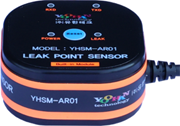
YHSM-AR01 (Integrated Type)
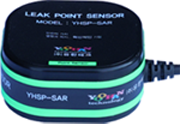
YHSP-SAR (Separated Type)
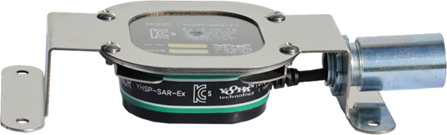
YHSP-SRA-Ex (Explosion-Proof Type)

Now, you no longer need to worry about leak detectors...!!!
A company dedicated to industrial safety Yoohantech Co., Ltd. will do its best to help prevent personal injury and property damage caused by chemical leakage from your operations and facilities.

If you have any questions or inquiries, please feel free to contact us at any time.
We will help you find the right answer quickly.

Liquid Leak Detector: Technical Inquiry
We confirm applicability and recommend solutions based on your target liquid and site conditions.
Setting the trusted standard for liquid leak detection in industrial facilities.
I want to



Defining the Trusted Standard in Liquid Leak Detection for Industrial Safety.