

safety, driven by dedication, and delivering innovation.
📌 Key Summary of Leak Detector Installation in Hazardous Areas
This guide explains the essential explosion-proof rating requirements such as Ex ia and the mandatory use of a Zener Barrier when installing a leak detector in hazardous areas with explosion risks. It also covers key installation practices, including detector placement, wiring, inspection, and maintenance to help prevent hazardous chemical leak accidents.
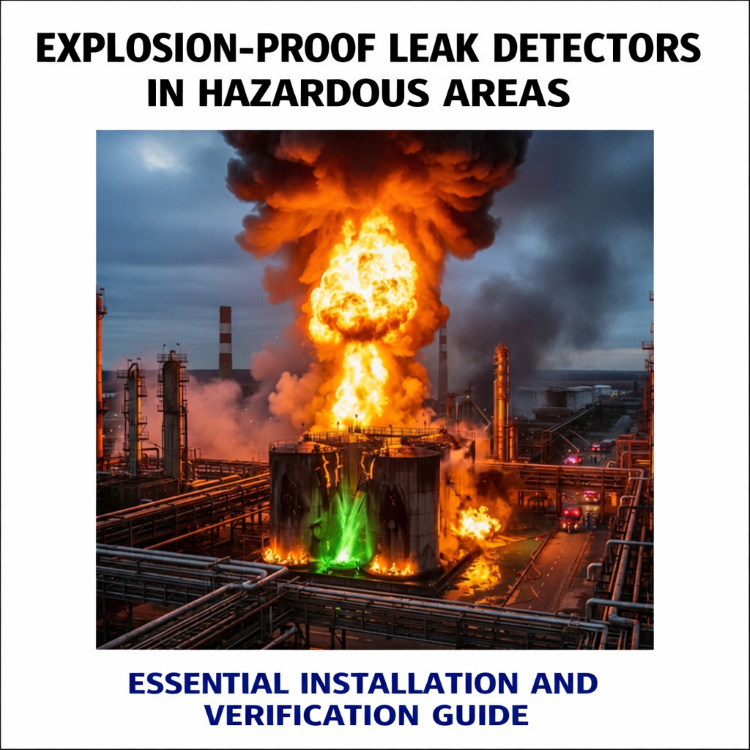
When handling liquid hazardous chemicals or flammable liquids in environments where an explosion may occur, proper installation and careful verification of an explosion-proof leak detector are essential to prevent major accidents caused by liquid leaks.
When installing a leak detector in a hazardous area, safety must come first by complying with relevant regulations and technical standards.
This guide provides a step-by-step overview of the key checks required before installation, during installation, and after commissioning.
1. Pre-installation Checks
These are the items that must be reviewed in advance to ensure a safe and successful installation.
A. Confirm the hazardous area classification and select the proper detector:
The first and most important step is to clearly identify which hazardous area classification applies to the installation site. Hazardous areas are generally classified according to how often an explosive atmosphere is present and how long it remains.
- Zone 0: A high-risk area where explosive gas is present continuously or for long periods of time (for example, inside a tank)
- Zone 1: An area where explosive gas may be present intermittently during normal operation (for example, pump rooms or areas near filling stations)
- Zone 2: An area where an explosive atmosphere is likely to occur only under abnormal conditions and only for a short period (for example, around well-ventilated outdoor equipment)
A leak detector must be selected with the proper explosion-proof rating (for example, Ex d or Ex ia), gas group and temperature class (for example, IIC or T6), and valid certification such as KCs, ATEX, or IECEx that matches the installation environment. Always verify this information through the product nameplate and certification documents.
One critical point that must never be overlooked when configuring an intrinsically safe Ex ia system is this: if the product is certified as Ex ia (intrinsically safe), a Zener Barrier must be installed on the receiver/control side. In other words, Ex ia certified products must be used together with the Zener Barrier or isolator specified in the certification documents.
|
✅ Ex ia Intrinsically Safe Systems and the Zener Barrier
1. Ex ia is not just a single device. It is a complete system. The most important concept is that intrinsic safety is not achieved by one explosion-proof device alone. It is certified as one complete system consisting of the field device + interconnecting cable + Zener Barrier/isolator.
2. The role of the Zener Barrier: energy limitation The Zener Barrier is a safety device that prevents overvoltage or overcurrent from the safe-area control system, such as a receiver or PLC, from reaching the field device in the hazardous area. If a detector is connected directly without a barrier, even a small electrical fault in the control system could create a spark in the hazardous area and lead to an explosion. ⚠️
3. Certification document review is essential. When a manufacturer obtains Ex ia certification, the submitted system documentation, such as the Control Drawing or System Description Document, will specify the Zener Barrier model or the required electrical parameters, including maximum voltage Uo and maximum current Io.
Therefore, during installation, you must review the relevant certification documents to confirm that the specified barrier is being used, or that an equivalent barrier meets the required specifications. If this requirement is not met, the Ex ia rating has no practical meaning and explosion-proof performance cannot be guaranteed.
In conclusion, it is worth emphasizing once again: "For Ex ia rated products, the Zener Barrier or isolator specified in the certification documents must be installed." |
B. Analyze the properties of the target liquid:
The detector must be selected based on the chemical properties of the target liquid, such as corrosiveness, reactivity, specific gravity, and vapor pressure. The most appropriate sensing method, such as optical, electrochemical, or conductivity-based sensing, should be chosen accordingly. This directly affects detection accuracy and long-term durability.
C. Review relevant regulations and technical guidelines:
- Chemicals Control Act: Specifies legal requirements for leak detection and alarm systems in facilities handling hazardous chemicals
- KOSHA Guidelines: Provide detailed technical requirements for the design, selection, installation, and initial inspection of explosion-proof electrical equipment
- Manufacturer’s installation manual: The unique installation requirements and precautions for the selected detector model must always be followed
2. Key Installation Procedures and Checks
These are the key procedures during actual installation to prevent errors and ensure safety.
A. Select the optimal detection location:
- Points most likely to leak: Install the detector below or near the areas with the highest leak risk, such as valves, pumps, flange joints, and tank bottoms
- Expected liquid flow or pooling points: Consider trenches, floor low points, and other areas where leaked liquid is likely to flow or collect
- Installation spacing: Under Korean chemical safety regulations, a general guideline is at least one detector every 10 m indoors and 20 m outdoors, but spacing should be adjusted based on site conditions and risk assessment
B. Explosion-proof electrical wiring work:
- Wiring suitable for the explosion-proof protection method: For flameproof Ex d structures, certified explosion-proof cable glands and metallic conduits must be used. For intrinsically safe Ex i systems, dedicated cables separated from other electrical circuits must be used and installed according to applicable regulations
- Cable and terminal treatment: Check cables for damage and ensure firm terminal connections to eliminate the possibility of spark generation
- Grounding: All explosion-proof equipment must be properly grounded in accordance with regulations to prevent static buildup and electric shock risks
C. Install the detector and control panel:
- Secure mounting: The detector must be firmly fixed so that vibration or external impact does not affect operation
- Alarm integration: The leak signal should be linked to visual and audible alarms, such as beacon lights and sirens, so personnel in the control room or security room can recognize it immediately
- Prevent false alarms: Avoid installation in locations exposed to excessive heat, humidity, strong vibration, or electromagnetic interference. Use protective covers if necessary
3. Post-installation Verification and Maintenance
After installation is completed, these are the essential steps to verify proper operation and maintain long-term performance.
A. Initial inspection and performance testing:
- Visual and wiring inspection: Check whether the installed detector and wiring match the drawings and whether there is any physical damage
- Operational testing: Use the actual target liquid or an alternative test liquid to confirm that the detector senses the leak properly and that the alarm system operates as intended. During this process, response time and sensitivity settings should also be checked
- Explosion-proof installation compliance check: It may be necessary to have the explosion-proof electrical installation verified by an accredited inspection body and secure the relevant inspection records
B. Documentation and training:
- Keep related documents on site: Installation drawings, explosion-proof certificates, manufacturer manuals, and calibration certificates should be kept and managed at the site
- Operator training: Personnel should be trained regularly on the detector location, emergency actions when an alarm occurs, and initial response procedures
C. Regular maintenance:
- Routine inspection: Regularly check the area around the sensor for contamination or damage
- Periodic calibration: According to the manufacturer’s recommended interval, typically every 6 to 12 months, the sensor sensitivity should be checked and calibrated to maintain reliability. Calibration records should always be documented and managed
Installing a leak detector in a hazardous area is not simply an equipment upgrade. It is a critical investment in workplace safety. By thoroughly following the essential points above, you can better protect both people and property from potential risks.
Industry-Specific Leak Detection Proposals
Semiconductors · Petrochemicals · Oil Refining · Batteries · Power Generation · Steel · Warehousing · Wastewater Treatment · Defense
Liquid Leak Detector: Technical Inquiry
We confirm applicability and recommend solutions based on your target liquid and site conditions.
Setting the trusted standard for liquid leak detection in industrial facilities.
I want to










Defining the Trusted Standard in Liquid Leak Detection for Industrial Safety.