Intrinsically Safe Liquid Leak Detection System for a New Chemical Storage Warehouse at 0000 Co., Ltd.
This case shows the installation of Yoohantech intrinsically safe liquid leak detectors at a new chemical storage warehouse in Eumseong, Chungbuk. The system was built for a hazardous area using steel conduits, explosion-proof sealing fittings, sealing compound filling, flexible explosion-proof conduits, a YH-200L receiver, a 105dB beacon, a Zener barrier, and a backup battery so that site operators can immediately recognize a leak alarm.
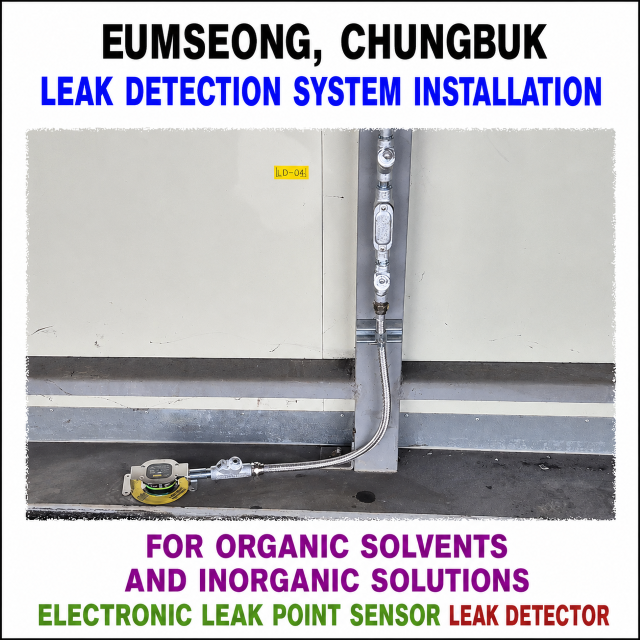

Leak Detection System for a New Chemical Storage Warehouse
Hello. This is Yoohantech, an industrial liquid leak detection specialist.
Today, we are introducing an installation case of a liquid leak detection system at a new chemical storage warehouse of 0000 Co., Ltd. in Eumseong, Chungbuk.
0000 Co., Ltd. is a specialty chemical manufacturer producing various chemical additives such as PVC stabilizers and UV absorbers. Raw materials and finished products are stored in a dedicated warehouse, and some chemicals may create fire, explosion, or environmental risks when leaked. For this reason, systematic safety management is essential.
At this newly built chemical storage warehouse, Yoohantech liquid leak detectors were installed to help prevent leak accidents during material storage and to build a safer working environment.
In storage warehouses, early signs of leakage are often difficult to notice during normal operation. At night or during unmanned operation, it can be even harder to confirm a leak immediately. This is why a leak detection system that can quickly detect leakage at an early stage and trigger an alarm plays a critical role.
Let’s take a look at the actual installation site.

Steel Conduit Installation in a Hazardous Area
The Yoohantech field team is shown carrying out the installation work. Because the site is classified as a hazardous area, ordinary electrical conduit work was not suitable. Installation had to follow explosion-protection requirements and support the intrinsically safe leak detection system. Using a lift, the technicians routed steel conduits along the upper warehouse structure. The conduit path was installed at height so it would not interfere with forklift movement, material handling, or entrance access.
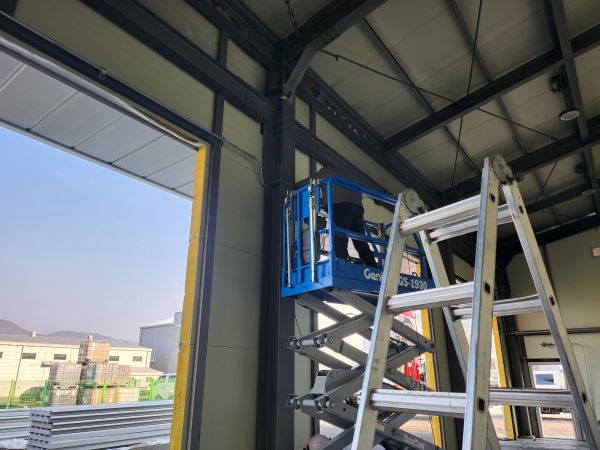
Steel conduit installation using a lift inside a hazardous chemical storage warehouse
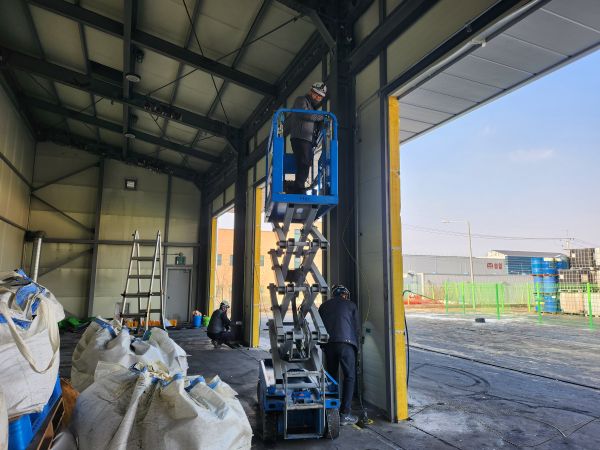
Aligning the upper steel conduit route for the new chemical storage warehouse
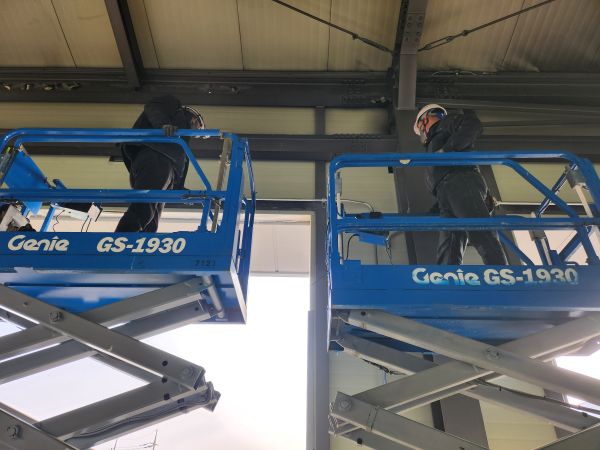
Connecting steel conduits above the ceiling area in a warehouse with multiple entrances
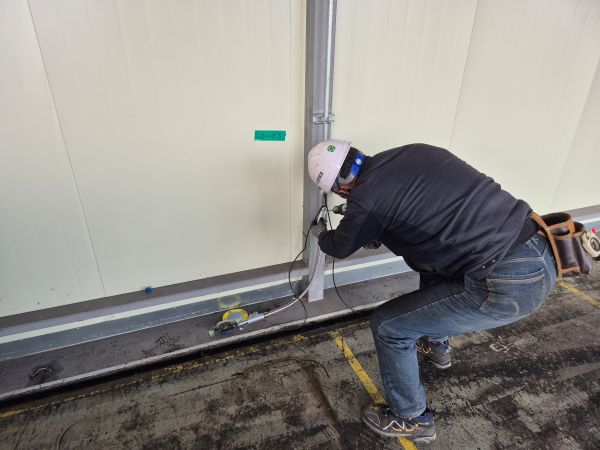
Wiring work for intrinsically safe liquid leak detectors inside the chemical storage warehouse
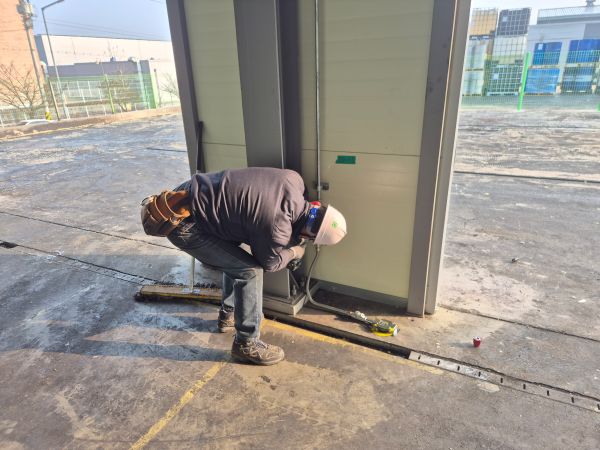
Final installation work using sealing fittings and steel conduits for the leak detection system
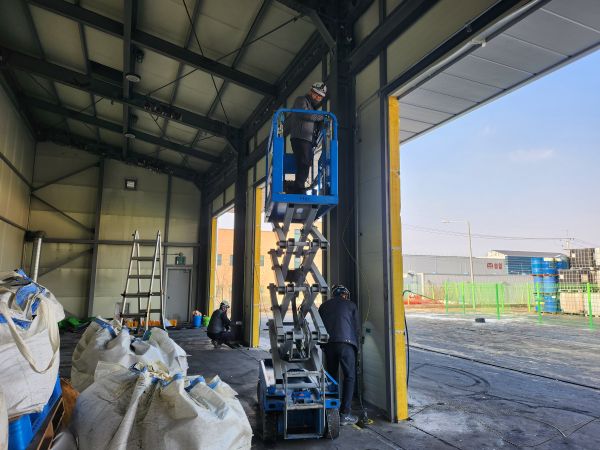
Checking conduit alignment and fixing condition after hazardous-area conduit installation

Wiring work for intrinsically safe liquid leak detectors inside the chemical storage warehouse
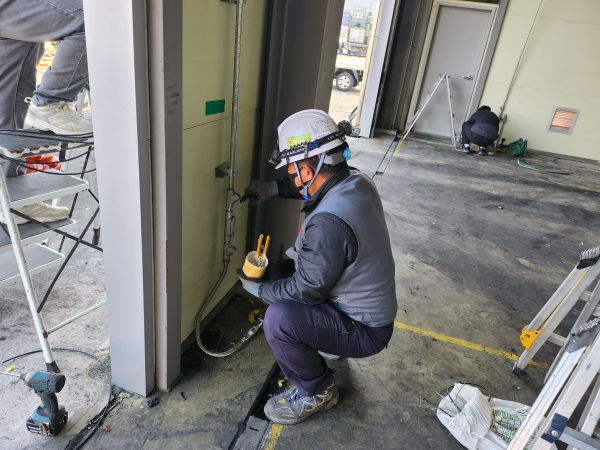
Filling sealing compound into the sealing fitting for the intrinsically safe leak detection installation
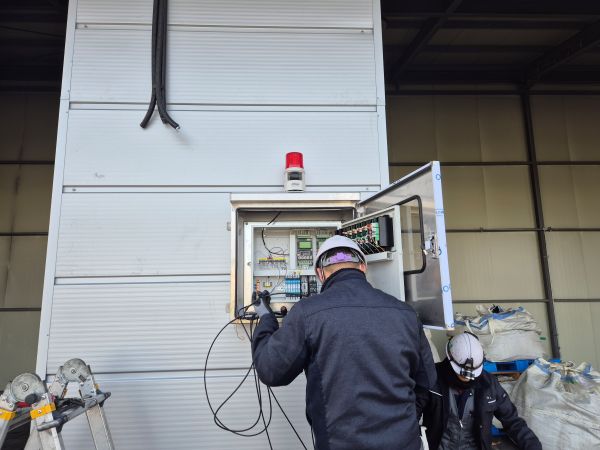
Receiver installation work outside the new chemical storage warehouse
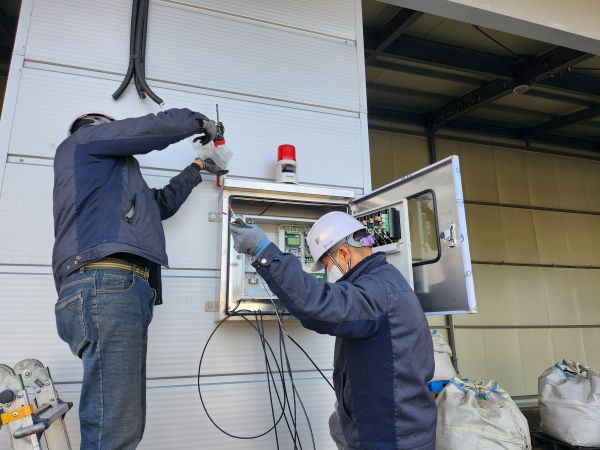
Receiver fixing and final installation work
Hazardous-Area Conduit Routing for a Warehouse with Multiple Entrances
The warehouse had multiple entrances, which made the conduit route long and complex. Yoohantech installed the steel conduits at the upper structure using a lift, preventing interference with worker movement and material handling.
All wiring was installed through steel conduits, and explosion-proof sealing fittings were applied. Inside each sealing fitting, fiber material and sealing compound were filled to maintain explosion-protection performance and help block flame propagation in the event of an internal explosion.
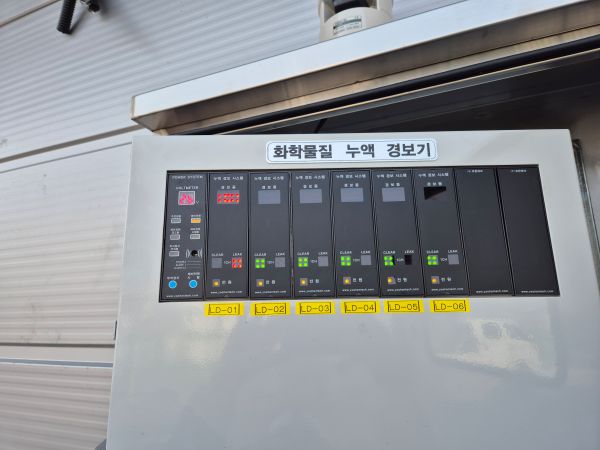
The receiver panel was installed near the warehouse entrance so that both indoor operators and nearby workers could recognize a leak event immediately. A high-intensity 105dB beacon was also connected so alarms could be noticed from a distance.

Dedicated Sensors for Inorganic Solutions and Organic Solvents
The liquid leak detectors were installed neatly according to the site conditions. For the inorganic solution storage area, the YHSP-SAR-Ex intrinsically safe leak detector for inorganic solutions was installed. For the organic solvent storage area, the YHSP-SA-Ex intrinsically safe leak detector for organic solvents was installed. This site uses two different leak detector types in one warehouse, optimized for different chemical families.
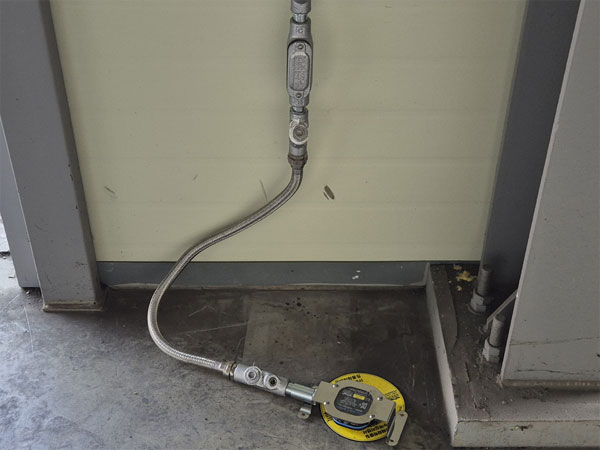
YHSP-SAR-Ex intrinsically safe liquid leak detector installed on the chemical storage warehouse floor
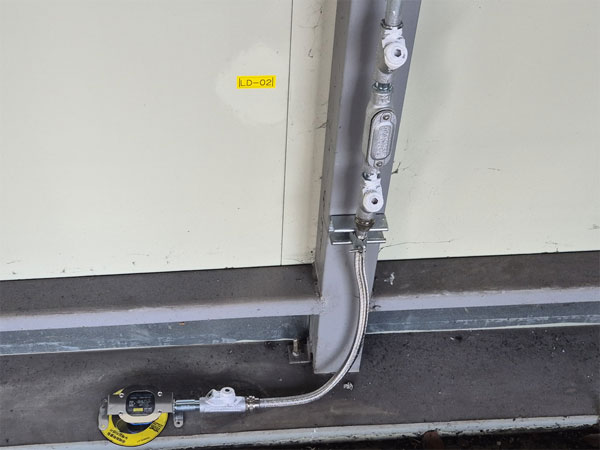
Detailed view of the leak detector connected with a condulet and flexible explosion-proof conduit
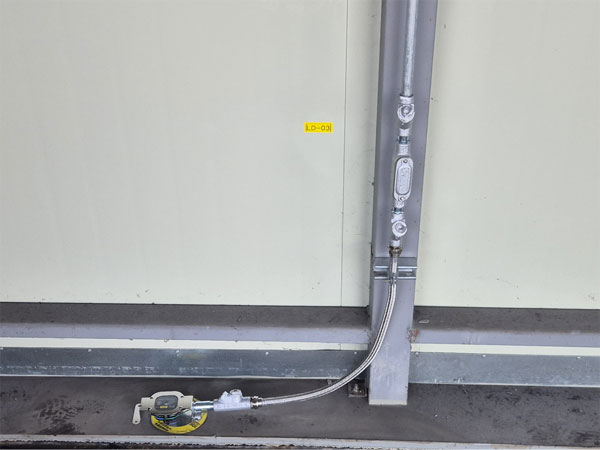
Intrinsically safe leak detection sensors installed for inorganic solution and organic solvent storage areas
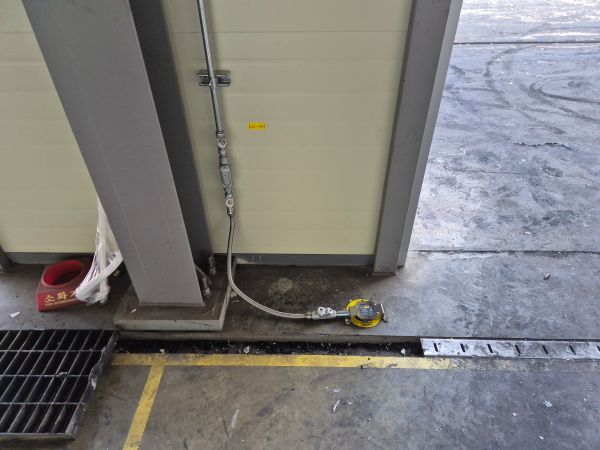
Installed leak detector connected through steel conduit and an explosion-proof junction box
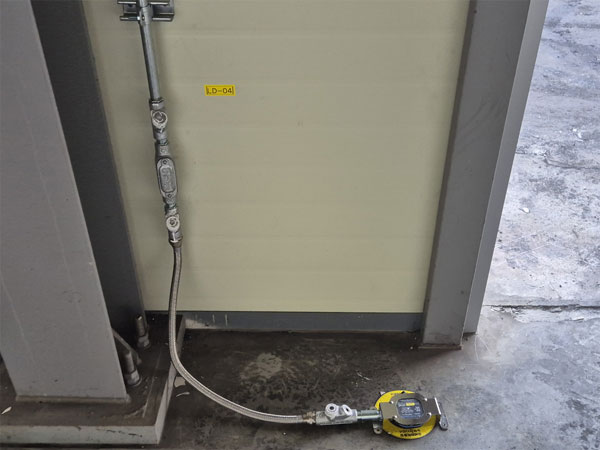
Sensor installation for monitoring potential leak points in the new chemical storage warehouse
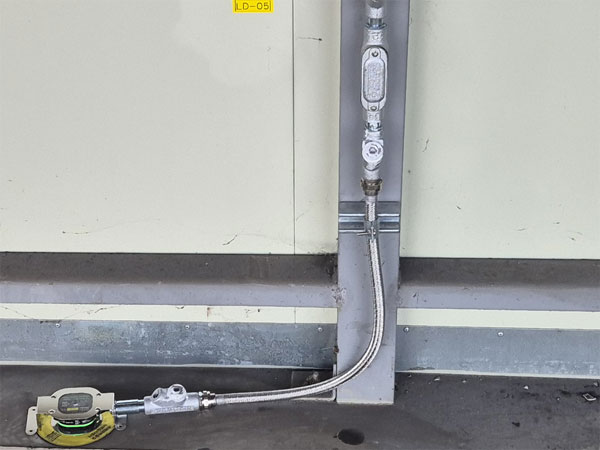
Completed Yoohantech intrinsically safe leak detector installation with flexible explosion-proof conduit
Sensor Connection Using Hazardous-Area Installation Materials
The leak detection sensors were connected using flexible explosion-proof conduits and explosion-proof junction boxes. All wiring was installed with steel conduits and explosion-proof condulets. Even a small connection point can affect site safety, so the team checked conduit direction, connection positions, and maintenance access during installation.
The sealing fitting work, a key part of hazardous-area installation, was also completed. Fiber material and sealing compound were filled inside the sealing fittings to secure explosion-protection performance and help prevent flame propagation.

YH-200L Receiver and 105dB Beacon Installation
The next photos show the installation of the YH-200L leak alarm control receiver. Because the receiver was installed outdoors, it was mounted inside a SUS enclosure to protect the equipment from rain, dust, moisture, and other environmental factors. A high-intensity 105dB beacon was installed on top of the enclosure so workers around the warehouse can immediately recognize an abnormal condition when a leak occurs.
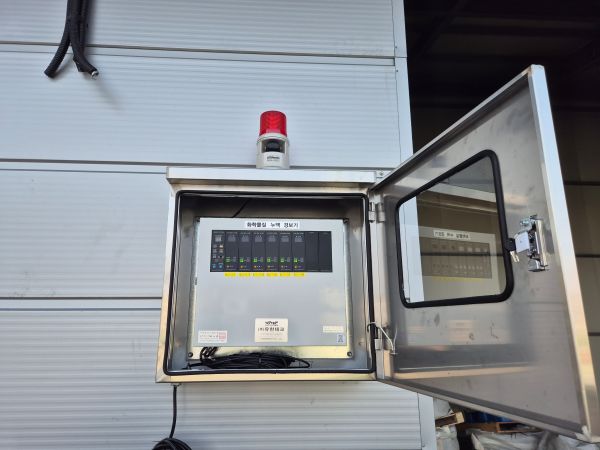
YH-200L leak alarm control receiver installed inside an outdoor SUS enclosure
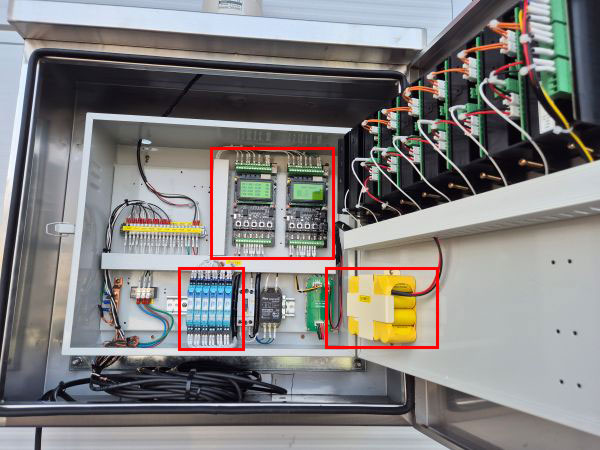
Inside the receiver panel with YHSM-04S-A organic solvent module and YHSM-04S-AR inorganic solution module
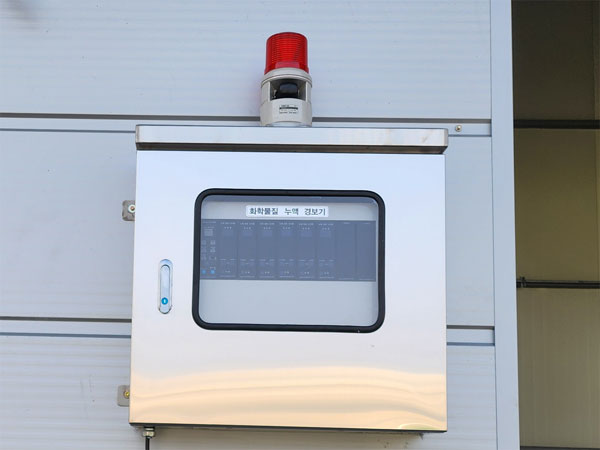
High-intensity 105dB beacon and outdoor leak detection receiver mounted on a SUS enclosure
Organic Solvent / Inorganic Solution Modules and Zener Barrier Configuration
A closer look at the photos shows Yoohantech leak detection control modules: YHSM-04S-A for organic solvents and YHSM-04S-AR for inorganic solutions. This configuration enables leak monitoring for different chemical families stored in the warehouse.
The leak detectors applied at this site are intrinsically safe explosion-protected products. For the intrinsically safe circuit configuration, an MTL7760ac Zener barrier was applied. The Zener barrier limits electrical energy supplied to the hazardous area to a safe level, helping the system operate reliably even in locations where explosive gas may be present.
A backup battery was also installed so monitoring does not stop during unexpected emergencies such as power failure or natural disasters. The system was configured so that the leak detection system and alarm devices can continue normal operation for at least one hour even if external power is interrupted, adding another layer of safety.

Commissioning Test Using Actual Liquids
These photos show the commissioning process after installation, using actual chemical liquids to verify normal operation. Installing a leak detector is important, but confirming that the alarm operates correctly during an actual leak condition is even more critical.
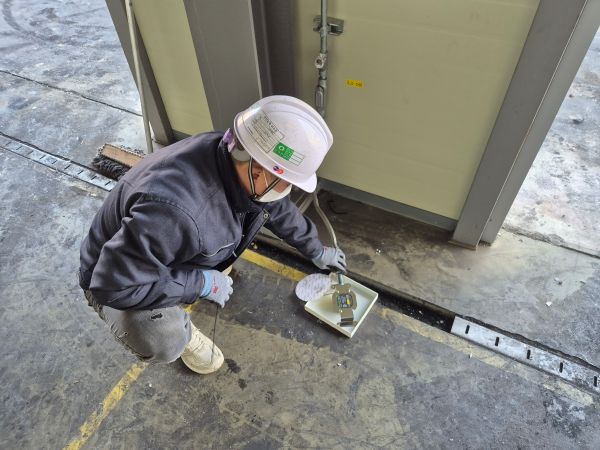
Testing leak detection performance with actual liquid after installation
Final commissioning test to verify sensor detection and alarm operation at the chemical storage warehouse
Yoohantech Field Verification Beyond Installation
After installation, Yoohantech performs on-site verification by checking sensor detection performance and alarm operation with actual liquids. In many industrial facilities, leak detectors may remain installed for years without regular testing. They may look normal from the outside, but if the alarm does not activate during an actual leak, the system cannot fulfill its purpose.
Yoohantech leak detectors also provide strong maintenance advantages. The inorganic-solution leak detector can be washed and reused after detection, while the organic-solvent leak detector is designed so that only the cartridge can be replaced when the sensor is damaged or sensitivity decreases after repeated detection. This helps reduce maintenance time as well as operating costs.
As shown in the photos, an actual leak situation was reproduced by spraying liquid onto the sensor. The team then confirmed the full sequence: sensor detection, beacon activation, and receiver alarm operation. A leak detector should not simply be installed. It must work reliably when an actual accident occurs.
What Remains on Site Is Not Just Equipment, But Safety
All installation and commissioning work was completed successfully.
When the team first arrived, this new storage warehouse was still being prepared with its safety systems. Now, a liquid leak detection system is in place to detect leakage immediately and deliver alarms across the site.
Steel conduit installation for hazardous areas, sealing fitting and compound filling work, intrinsically safe leak detector installation, Zener barrier application, emergency power configuration, and commissioning with actual liquids were all carefully completed.
A liquid leak detector stays quiet during normal operation. But when an accident occurs, it becomes one of the first safety devices to warn people of danger. That is why installation quality and field verification matter.
Yoohantech will continue to do more than supply products. We will check customer sites directly and build safety systems that work in real conditions.
This was Yoohantech, working to protect industrial sites from invisible risks.
Thank you.
“Safety is not built after an accident. It is prepared before one happens.”
Industry-Specific Leak Detection Proposals
Semiconductors · Petrochemicals · Oil Refining · Batteries · Power Generation · Steel · Warehousing · Wastewater Treatment · Defense
Liquid Leak Detector: Technical Inquiry
We confirm applicability and recommend solutions based on your target liquid and site conditions.
Setting the trusted standard for liquid leak detection in industrial facilities.