💡 Key Summary of This Article
Organic solvents such as hydrocarbons and alcohols are widely used in industrial processes. This guide explains their definitions, types, and properties, and introduces Yoohantech leak detectors (integrated, separated, and explosion-proof types) that can help support safer facility operation and preparation for compliance with the Chemicals Control Act.

Today, let’s take a closer look at organic solvents.
They are widely used not only in daily life, but also in metal processing and various manufacturing operations.

What Are Organic Solvents?
Organic solvents are carbon-based substances capable of dissolving or dispersing one or more other materials.
A wide range of chemicals are used as organic solvents, including aliphatic hydrocarbons, aromatic hydrocarbons, amines, esters, ethers, ketones, and nitrated or chlorinated hydrocarbons.
Organic solvents are used in paints, varnishes, lacquers, adhesives, tackifiers, degreasers and cleaners, dyes, polymers, plastics, textiles, printing inks, agricultural products, and pharmaceutical production.
In industrial facilities, organic solvents are used in painting, electronics manufacturing, metal products, and machinery cleaning. However, they are hazardous because of their high volatility and flammability. If absorbed through the skin or respiratory system, they may cause toxic effects. Therefore, workplaces handling organic solvents must implement essential safety measures such as installing safety equipment and requiring proper protective gear.
Industrial organic solvents are known by various names and commercial product names, and they often exist in mixed chemical formulations.

Types of Organic Solvents
More than 400 substances are known today. However, under the current Enforcement Rule of the Occupational Safety and Health Act in Korea, 51 substances are classified into Class 1, Class 2, and Class 3 organic solvents based on workplace usage and toxicity for health hazard prevention.
According to chemical structure, they can be classified into hydrocarbon-based solvents, halogenated hydrocarbons, alcohols, aldehydes, ethers, esters, ketones, glycol derivatives, and others.

Properties of Organic Solvents
The main properties of organic solvents are as follows:
Volatility: They evaporate easily and may exist in the air as vapor, which can be inhaled through the respiratory system.
Solvency: They dissolve oils and grease effectively, providing strong cleaning and degreasing performance.
Flammability: They ignite easily and may present a fire hazard.
Toxicity: When absorbed through the skin or respiratory system, they may affect the nervous system or cause toxic reactions.
Absorbability: When in contact with skin, they may pass through fatty tissues and be absorbed into the body.

Organic Solvents Under the Chemicals Control Act
Under the Chemicals Control Act, organic solvents are regulated as substances designated by Presidential Decree. These include certain organic solvents and products containing them, such as thinners, adhesives, balloon products, and paints.
When handling organic solvents, personal protective equipment must be worn and the same safety rules applied to toxic substances should be followed.
Substances subject to the Chemicals Control Act: According to the Enforcement Decree of the Chemicals Control Act, specific organic solvents such as toluene, ethyl acetate, and methyl alcohol, as well as products containing them including thinners, adhesives, balloon products, and paints, may be designated substances.
Safety rules for handling: Organic solvents are treated as hazardous chemicals, and standards for handling and management must be followed during manufacturing, import, sales, storage, transport, and use.
Use of personal protective equipment: Anyone handling or transporting organic solvents should wear proper PPE.
Compliance with toxic substance safety practices: Organic solvents should be handled in accordance with safety rules applied to toxic substances.
Safety management measures: Organic solvents should be isolated from reactive chemicals. In work areas, more than 5 gallons of solvent should not be stored in glass containers. They should also be moved only when exhaust hoods are operating and ignition sources have been removed.
Storage precautions: Because organic solvents expand as temperature rises, at least 2.5% headspace should be secured when stored in containers, and the containers should be sealed. They should also be stored in a cool, well-ventilated place away from direct sunlight.
Empty container handling: Sealed empty containers that once held organic compounds may explode due to frictional heat or sparks during cutting or perforation. Therefore, the contents must be fully removed and work should be performed only after the container has been opened.

So far, we have reviewed organic solvents and their characteristics.
Then what should be done when organic solvents are handled under the Chemicals Control Act?
The requirements are outlined below.
Under the Chemicals Control Act, installation of detection and alarm equipment is a required measure to support legal compliance when handling organic solvents.
Failure to comply may result in legal penalties, including fines or administrative sanctions.
|

Then how should detection and alarm equipment for organic solvents be installed?
This is often where many practical questions begin.

To give the answer first, the solution is to install a leak detector.
The answer is actually quite simple.
Many leak detectors on the market are expensive and prone to malfunction, but Yoohantech leak detectors are cost-efficient and capable of accurately detecting organic solvents.
Now, let us introduce which organic solvent leak detectors developed by Yoohantech can be used.
The product lineup is shown below.

YHSM-A01 (Integrated Type)
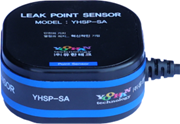
YHSP-SA (Separated Type)
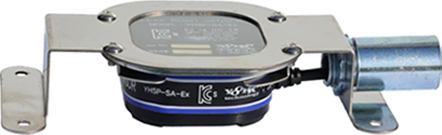
YHSP-SA-Ex (Explosion-Proof Type)

No more worries about leak detectors...!!!
Yoohantech Co., Ltd. is committed to helping prevent personal injury and property damage caused by chemical leakage in your facility.
If you have any questions or inquiries, please feel free to contact us at any time.
We will help you find the right answer quickly.

Liquid Leak Detector: Technical Inquiry
We confirm applicability and recommend solutions based on your target liquid and site conditions.
Setting the trusted standard for liquid leak detection in industrial facilities.